Progress MS-36 first to avoid unload through Zvezda
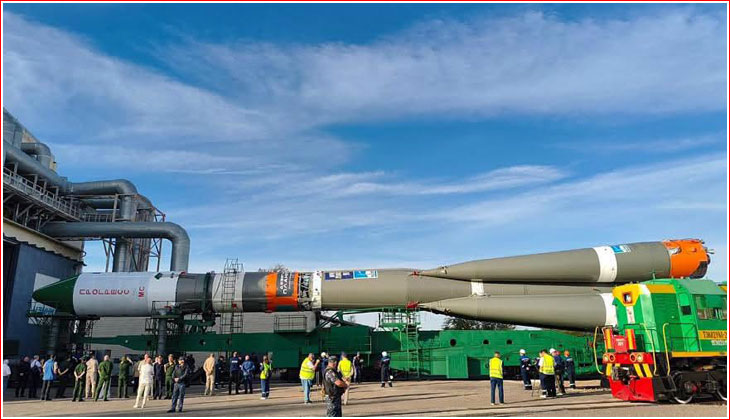
Site map Site update log About this site About the author Mailbox Searching for details: The author of this page will appreciate comments, corrections and imagery related to the subject. Please contact Anatoly Zak . Related pages: Progress-MS' GrO section INSIDER CONTENT Progress-MS refueling system INSIDER CONTENT Progress-ROS INSIDER CONTENT ISS in 2025 INSIDER CONTENT RD-107 INSIDER CONTENT Progress MS-36 first to avoid Zvezda unloads The fourth and final Russian re-supply flight to the International Space Station, ISS, in 2026 is slated to launch from Baikonur on November 24. It is the first cargo mission, which will perform two dockings to the Russian Segment due to the permanent closure ( INSIDER CONTENT ) of the air-leaking "hallway" into the Zvezda Service Module, which was previously available for unloading cargo. Previous cargo mission: Progress MS-35 SUPPORT THIS PROJECT! Progress MS-36 mission at a glance: Spacecraft designation(s) Progress MS -36, 11F615 No. 466, ISS mission 97P Launch vehicle Soyuz-2-1b Payload fairing SZB: 11S517A2. 1000A1-0 Launch site Baikonur , Site 31 , Pad 6 Mission Cargo delivery to the ISS Expedition 75 Launch date and time 2026 Nov. 24, 13:13 Moscow Time (planned) Docking date and time 2026 Nov. 26 Docking destination ISS , Russian Segment , Poisk module (MIM2), zenith port Deliverable payload mass ~2,500 kilograms Mission duration ~6 months (?) End of mission 2027 Starting with the Progress MS-36 mission, Roskosmos planned to perform the cargo-ship's two main functions — the cargo delivery and orbit corrections of the ISS — at two different docking ports, following a decision by the partners to leave the air-leaking Transfer Chamber, PrK, on the Zvezda Service Module , SM, permanently closed due to its unstoppable air leak . ( INSIDER CONTENT ). As a result, Progress M-36 was first to be unloaded through open hatches of the Poisk module , MIM1, and only then to be re-docked to the aft port of the PrK compartment as the most appropriate location for firing its engines, because it aligns the ship's propulsion system with the station's main axis. During the maneuvers and all other times, the hatches between the cargo ship and the Zvezda's PrK chamber will remain closed, providing no access into the Progress' pressurized Cargo Section, GrO . ( INSIDER CONTENT ) Beyond Progress MS-36 mission, the redockings between the ports will be a routine for Roskosmos' missions, combining cargo deliveries and orbit-correction tasks, which is essentially all Progress-MS ( INSIDER CONTENT ) flights heading to the ISS before its planned deorbiting . ( INSIDER CONTENT ) As usual, Progress MS-36 was loaded with food and other supplies in its pressurized cargo compartment, while the refueling section ( INSIDER CONTENT ) contained propellant, water and oxygen. Progress MS-36 launch campaign under wraps The Progress MS-36 launch was originally expected on Aug. 17, 2026, but by October 2025, the mission had slipped to Sept. 9, 2026. Following the service platform collapse at Site 31 in Baikonur in November 2025, and the resulting domino effect of delays, the Progress MS-36 mission was re-scheduled for Nov. 24, 2026. The launch time was originally calculated at 08:03 Moscow Time, but was eventually adjusted to 13:13 Moscow Time and, ultimately, to 13:17 Moscow Time. The Soyuz-2 rocket for the mission was delivered to Baikonur by June 2, 2026, followed by the cargo ship itself on June 10, 2026. Around that time, Roskosmos and its entities largely stopped providing on-time updates on most launch campaigns and their major milestones, including the testing and fueling of Progress MS-36, its integration with the launch vehicle and even the rollout of the rocket with the spacecraft to the launch pad in Baikonur. NASA also made no comments about the upcoming mission. Progress MS-36 launch profile A Soyuz-2-1b rocket , carrying the Progress MS-36 cargo ship, is scheduled to lift off from Pad 6 at Site 31 in Baikonur on Nov. 24, 2026, at 13:13 Moscow Time (5:13 a.m. EST, 10:13 UTC). Following a vertical liftoff under the combined thrust of the four RD-107 engines ( INSIDER CONTENT ) on the first stage and the single RD-108 of the second (core) stage, the launch vehicle will head eastward from Baikonur matching its ground track to an orbit inclined 51.67 degrees to the plane of the Equator. The four first-stage boosters should separate 1 minute 58 seconds after liftoff, at an altitude of around 43 kilometers. In the meantime, the second stage will continue firing. The third stage will then ignite moments before the separation of the second stage, firing its RD-0124 engine through a lattice structure connecting the two boosters and ensuring a continuous thrust during the separation process. A fraction of a second later, the boosters of the second and third stage will part ways and the aft cylindrical section of the third stage should split into three segments and drop off, ensuring the fall of the second stage and of the aft section into the same drop zone on the ground. The second stage separation will be followed by the split and drop of the two halves of the payload fairing at an altitude of around 165 kilometers. The third stage will complete firing its engine and released the cargo ship into an initial parking orbit around nine minutes into the flight. Progress MS-36 to dock with the ISS This page is maintained by Anatoly Zak; last update: November 23, 2026 Page editor: Alain Chabot; last edit: November 23, 2026 All rights reserved